

Does A Cat Parasite Really Control Human Behavior? A Critical Look at the Evidence
Exploring the evidence linking Toxoplasma gondii to personality, accident risk, entrepreneurship, impulsivity, schizophrenia, and even sexual attraction.


Best known as the cat parasite, Toxoplasma gondii lives in a dormant state in about one-third of the global population. It’s most famous for infecting the brain of rodents and then dulling their fear of cats. This trait makes evolutionary sense because cats are the only host in which the parasite can reproduce, allowing it to complete its life cycle.
Naturally, we’d ask: if T. gondii can control animal behaviour, could it also influence human behaviour? Over the past few decades, multiple lines of evidence have suggested that infected people may be more reckless, entrepreneurial, and even sexually attractive. At first glance, the idea seems plausible. After all, biologically, humans are mammals too.
But how strong is the evidence? Does the parasite meaningfully alter human behavior, or have we been reading too much into correlations?
In this article, I take a critical look at the evidence behind some of the popular claims surrounding T. gondii infection, including personality, traffic accidents, entrepreneurship, impulsivity, schizophrenia, and sexual attraction. There’s a lot to unpack — hope you’ll bear with me!
A Fatal Attraction
Let’s start with some background.
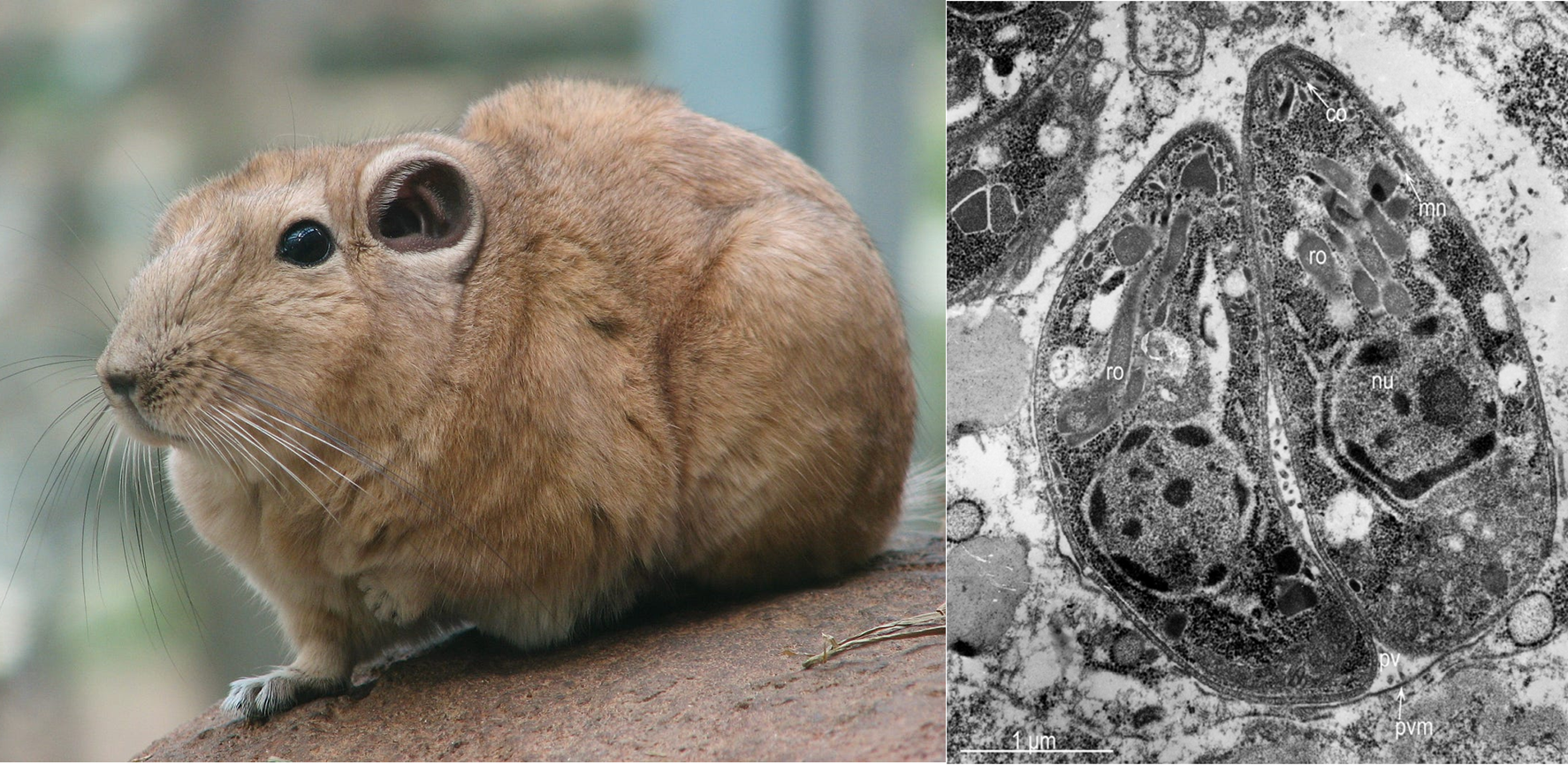
T. gondii was initially discovered inside a small rodent called the gundi. In 1908, French physician-scientists Charles Nicolle and Louis Manceaux at the Pasteur Institute in Tunis observed a novel protozoan in the tissues of this animal, named Toxoplasma gondii — “toxo” for its bow-like shape, and “gondii” after the rodent in which it was found (Figure 1).
At first, there was nothing special about this discovery.
T. gondii was just another microscopic parasite. Over the next few decades, scientists gradually realized that it could infect many animals and humans, often staying dormant in the brain and muscles. But there was one mystery: we didn’t understand how its life cycle was completed.
The clue emerged in the 1960s, when Scottish parasitologist William Hutchison found that cats were shedding egg-like T. gondii oocysts in their feces. These oocysts could survive outside the body, contaminate soil, water, and food, and infect new hosts. But they were produced only after T. gondii underwent sexual reproduction in the cat’s intestine.
So, while other animals could carry the parasite, only cats could release it back into the world. Only a cat could complete its life cycle.
(It wasn’t until 2019 that a study explained why T. gondii can only reproduce in cats. Unlike other mammals, cats lack delta-6-desaturase, an enzyme that metabolizes linoleic acid. As a result, linoleic acid accumulates in the cat’s intestine, allowing T. gondii to begin sexual reproduction. When the study inhibited delta-6-desaturase in mice and fed them linoleic acid, T. gondii also began reproducing. Some mice even shed infectious oocysts.)
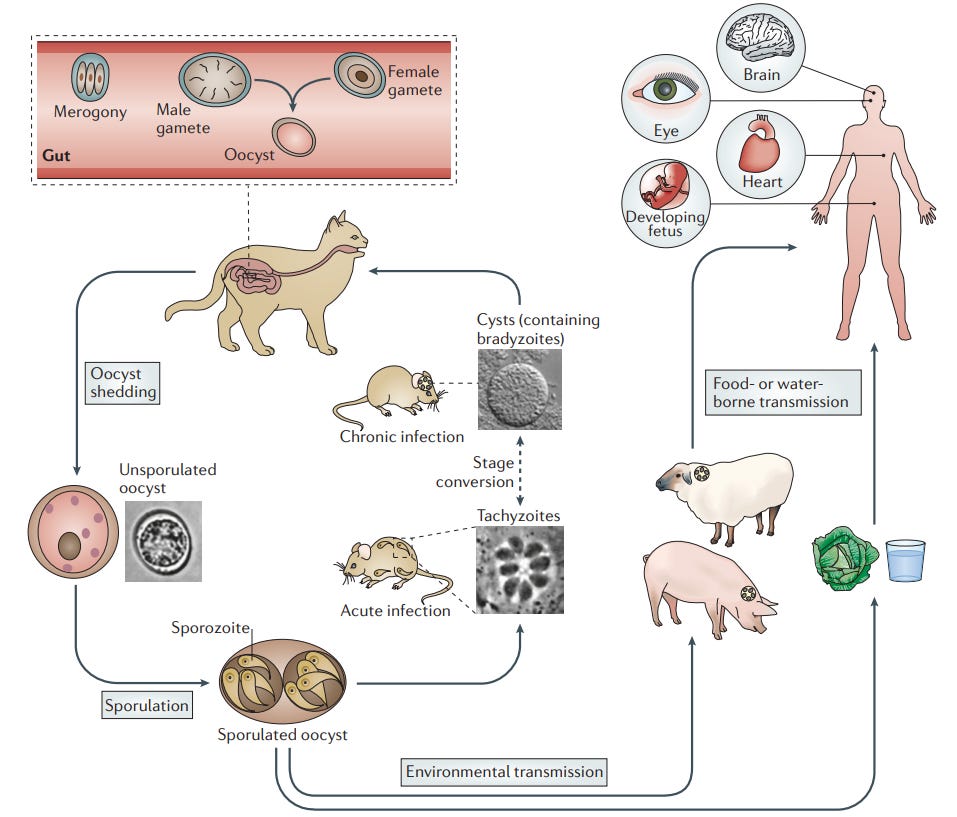
For the parasite, a rodent is simply a carrier. To complete its life cycle, T. gondii has to return to a cat (Figure 2). One obvious way for a parasite inside a rodent to reach a cat is brutally simple: the rodent has to be eaten.
(If cats were somehow our natural predators, maybe we would also be in the rodents’ shoes: manipulated into becoming prey.)
This is where the story took a strange turn.
In 2000, scientists at Oxford University published a study that gave T. gondii its reputation for mind manipulation. The setup was simple. Rats were left to explore an enclosed testing area where different corners were scented with cat urine, rabbit urine, their own bedding, or neutral bedding.
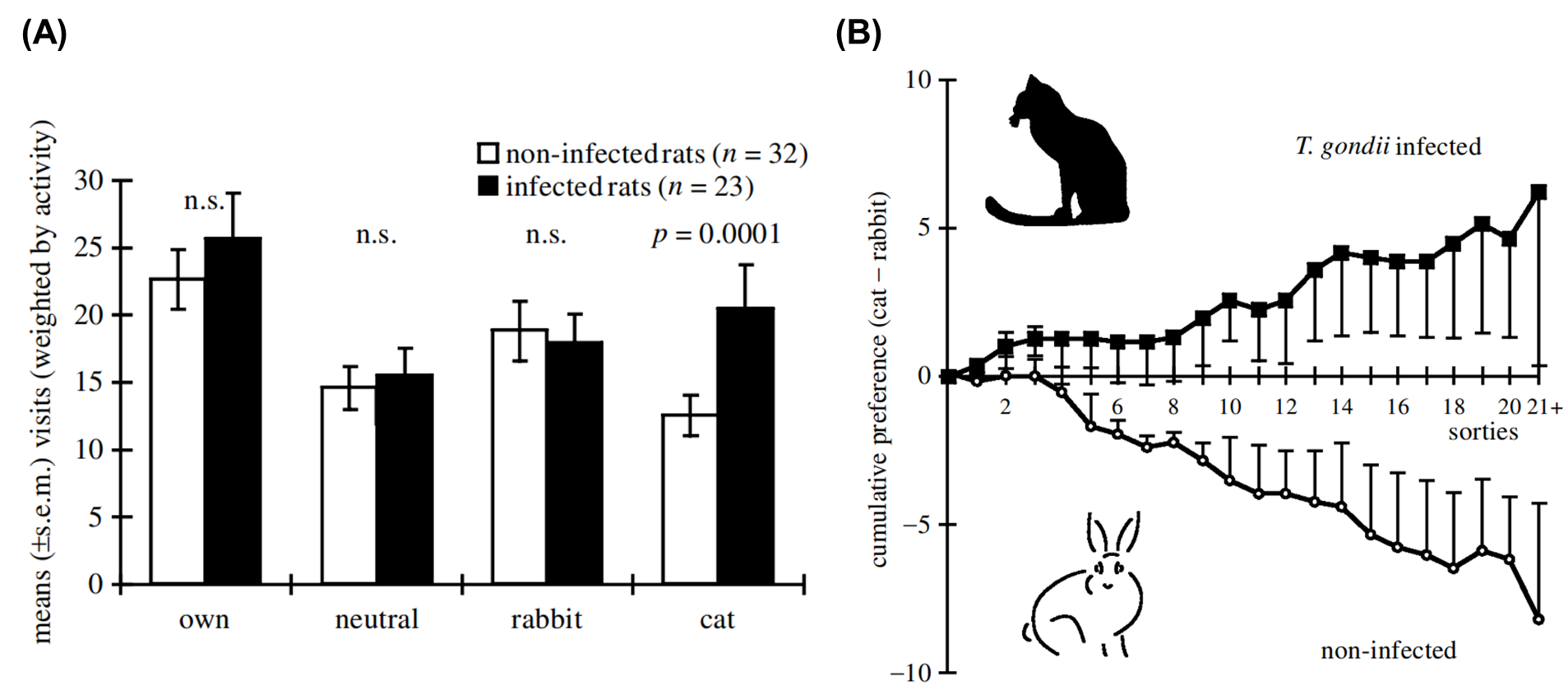
For a rat, cat urine is a chemical warning sign. Even laboratory rats that have not encountered cats for hundreds of generations still tend to avoid them. As expected, uninfected rats avoided the cat-scented areas.
But the infected rats behaved differently. They no longer showed the normal avoidance of cat urine. Among the most active rats, the infected ones even spent more time in areas marked by cat urine (Figure 3).
The title of the paper captured the finding well: “Fatal attraction in rats infected with Toxoplasma gondii.” Here was a parasite that needed to move from a rat into a cat, and the infected rat appeared to lose precisely the defensive response that would normally avoid cats.
Notably, T. gondii did not need to make the rat visibly sick or paralyzed. That would probably defeat the purpose. An ill rat may be less likely to explore, encounter predators, or behave naturally enough to be hunted.
Still, there was an objection. Maybe this was not mind manipulation at all. Maybe infected rats were simply less afraid in general.
That question was taken up years later by scientists at Stanford University, including the influential Robert Sapolsky, author of several bestselling books, including Behave: The Biology of Humans at Our Best and Worst.
They repeated the basic finding, but pushed it further. Infected rats and mice no longer avoided cat odors in the usual way. But when the study tested other behaviors, the animals seemed surprisingly normal. They moved normally, learned normally, remembered normally, smelled normally, and still showed normal anxiety-like behavior and learned fear.
So the parasite did not entirely wipe out fear. It seemed to interfere with one ancient, highly specific rule in the rodent brain: avoid cats.
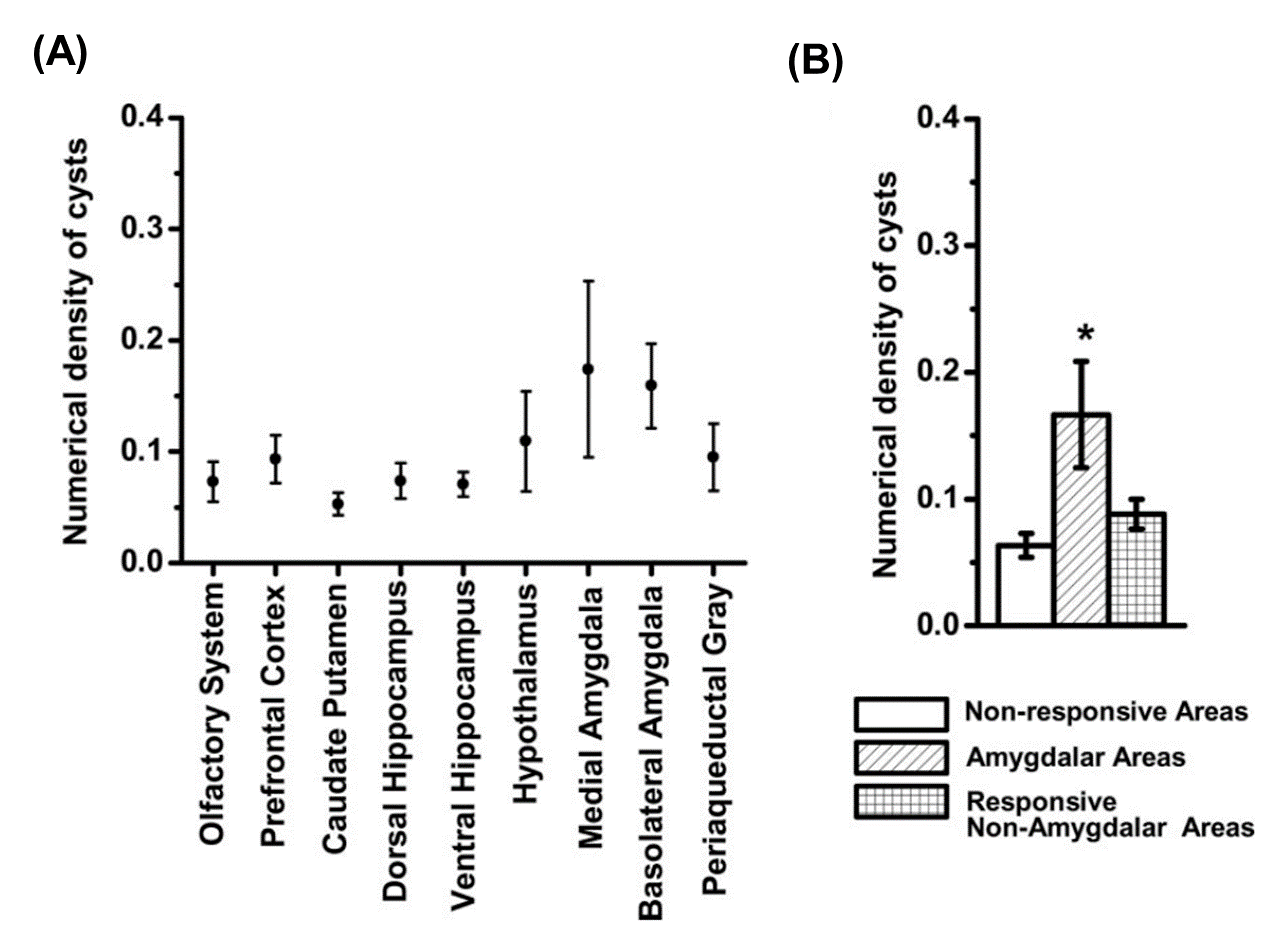
The study also found a possible clue in the brain. While T. gondii cysts were scattered across several regions, they were more concentrated in the amygdala, a brain region involved in fear and threat (Figure 4).
But even after the Stanford study, the mechanism remained unsettled. Scientists had pieces of evidence, not a complete model.
One possibility was that T. gondii was altering how the brain interpreted cat odor. In a later study, the Stanford group found that when infected rats smelled cat urine, nearby brain circuits involved in sexual attraction also became more active. So, cat odor may have conveyed a competing sexual-attraction signal that pulled the rat toward the scent.
Other studies suggest T. gondii may modulate dopamine pathways, alter the activity of synaptic proteins, or trigger low-grade neuroinflammation that affects how the brain assesses danger in general.
Overall, the evidence does not support a literal mechanism of “mind control,” where the parasite grabs the brain like a joystick. The more realistic scenario is that T. gondii may alter fear, reward, and inflammation in overlapping ways that nudge the rodent brain away from cat avoidance.
Still, T. gondii became the most famous example of parasitic behavior manipulation in mammals. Because its effect is oddly specific, a parasite that needed to reach cats erased a rodent’s instinctive fear of them.
The Parasitologist Who Was Infected
Once scientists had seen what T. gondii could do to rodents, the next question was unavoidable: what about humans?
Before answering that, we should understand the scale of the infection. Globally, around one-third of humans are estimated to carry T. gondii, although the prevalence varies by region. On average, seroprevalence was highest in Africa at about 61%, compared with around 31% in South America, 30% in Europe, 18% in the U.S. and Canada, and 16% in Asia.
We usually get infected by swallowing the parasite’s hardy oocysts shed by cats, which often contaminate water or food. In most healthy people, infection causes no symptoms or only a mild flu-like illness (toxoplasmosis). But once inside the body, T. gondii can convert into a dormant form and persist for life in long-lived muscle or brain tissues.
In immunocompromised people, dormant T. gondii can reactivate, causing severe disease in the brain, lungs, or other organs. During pregnancy, infection can cross the placenta and harm the developing fetus.
For a long time, then, dormant T. gondii was considered harmless in healthy people, unless the immune system failed or pregnancy was involved. But this assumption is being challenged by some behavioural research.
Some of the earliest clues came from the Czech parasitologist Jaroslav Flegr (Figure 5), who spent decades studying carriers of dormant T. gondii.
Flegr was soft-spoken, often avoiding sharing his research publicly. Yet, his work has garnered global media attention, including one of the most-read articles in The Atlantic, “How Your Cat Is Making You Crazy,” by science writer Kathleen McAuliffe in 2012. Owing to the success of this article, McAuliffe has also published a related book, “This Is Your Brain on Parasites: How Tiny Creatures Manipulate Our Behavior and Shape Society,” in 2016.

Flegr’s hunch of a parasite possibly influencing human behavior did not begin with rats and cats. Instead, Flegr had read about a flatworm that makes infected ants (famously called “zombie ants”) climb to the tip of grass and wait to be eaten by grazing animals. If a parasite could make ants reckless, Flegr wondered if something similar could happen in humans.
According to The Atlantic, Flegr began to wonder whether a parasite might explain some of his own reckless behaviour. He recalled often crossing busy streets with little concern for oncoming traffic, openly expressing anti-regime views during Czechoslovakia's Communist era, and remaining unfazed when gunfire erupted while his colleagues were terrified.
Most would probably dismiss such thoughts as overinterpretation. But when Flegr later joined Charles University in 1990, colleagues there were testing blood samples for T. gondii. Flegr donated a sample and discovered that he was a carrier. Flegr can’t help but think, what if this dormant parasite was subtly influencing human behavior?
Practically, Flegr was also in the right place to ask this question. Dormant T. gondii infection was common in the Czech Republic, so he did not need expensive animal facilities or brain-imaging equipment to begin. He had access to many students, who could be tested for antibodies, complete personality tests, and perform simple reaction-time tasks.
Flegr would go on to publish numerous studies on the association between dormant T. gondii infection and personality, reaction time, traffic accidents, and even sexual attraction. Other research groups have also supported and extended parts of Flegr’s work, lending further credibility.
While I don’t deny that such associations exist, I’m more curious about the effect size. Even if the associations are genuine, how much do they actually matter? To what extent does our behaviour get influenced?
Personality and Social Behaviour
Flegr’s first approach was simple. He compared infected and uninfected people using established personality questionnaires. In 9 out of 11 studies, there was a sex-specific pattern that appeared across different types of groups (students, civilians, and soldiers):
Infected men appeared more likely to disregard rules, mistrust others, and behave in a less socially conforming way than uninfected men.
Infected women tended to appear more outgoing, warm, conscientious, and socially attentive than uninfected women.
But because these self-reported personality tests are often subjective and biased, Flegr then tried a more objective method.
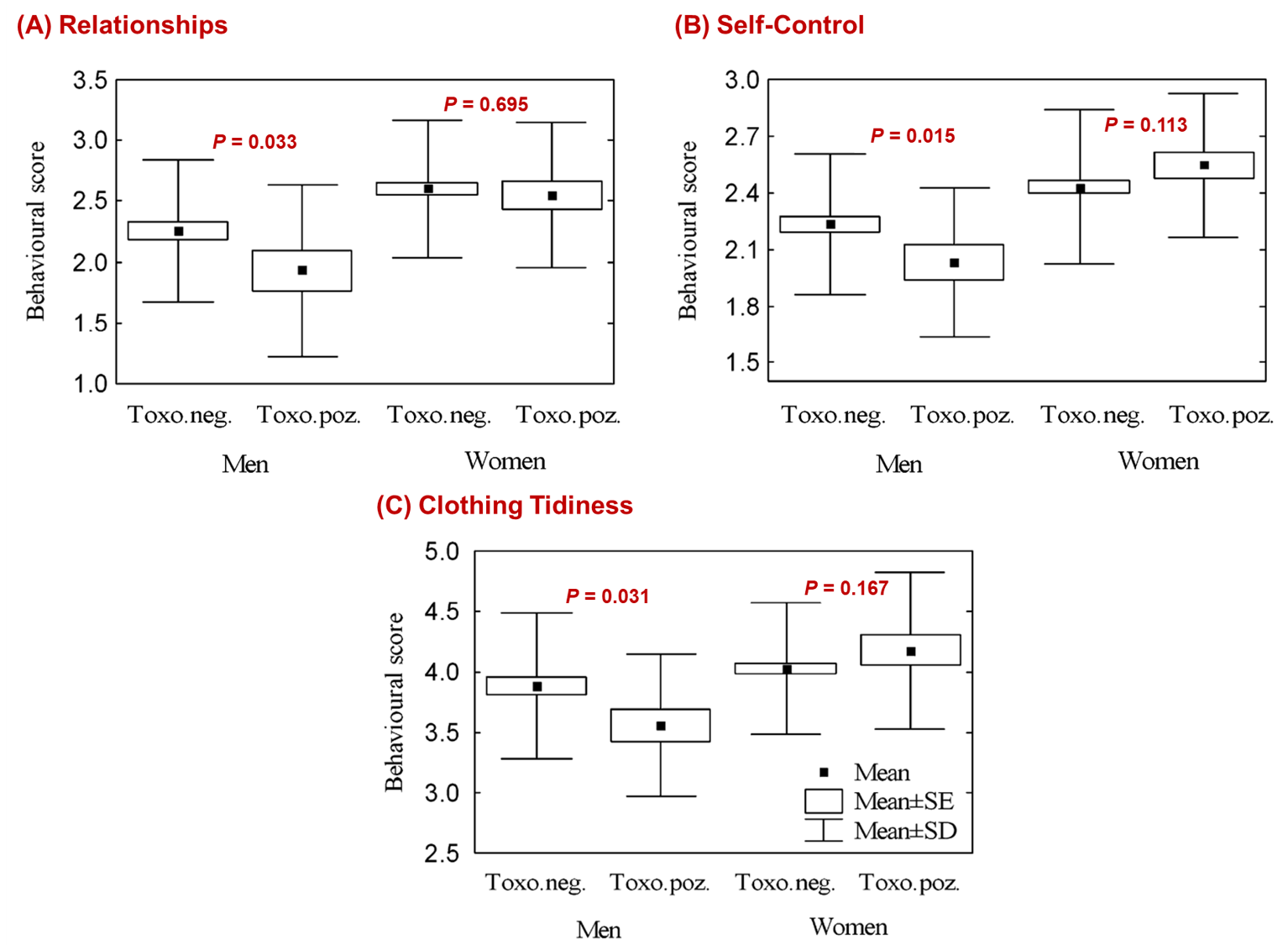
In a 2006 double-blind behavioural study, participants were observed in a one-hour session that included clothing assessment, questions about relationships, and small experiments designed to probe self-control and mistrust. The observers were aware of the participants’ infection status, and the participants were unaware of the study's specific purpose.
The study found that infected men scored lower on relationships, self-control, and clothing tidiness than uninfected men. While infected women tended to show a slightly opposite trend than uninfected women, the difference was not statistically significant (Figure 6).
In The Atlantic profile, Flegr may have exaggerated these findings a bit, claiming that infected men appeared less socially polished and more socially withdrawn, while infected women appeared more socially engaged and trusting. But in the actual study, infected and uninfected women did not differ significantly on the overall behavioural measure.
Looking at Figure 6, infected men scored lower than uninfected men across all three domains. These differences were statistically significant (P < 0.05), which means that the pattern was strong enough that it probably wasn’t just random noise in the data. But honestly, P = 0.03 is a near miss.
Statistical significance is different from effect size. The average gaps were only about 0.2 to 0.3 points on a 0-to-5 scale, and the scores (standard deviation bars) overlapped quite a lot between infected and uninfected people. So, we are only looking at a small shift in the average at the group level, not at the individual level. In other words, the effect is far too small to infer whether a man was infected based on behaviour alone.
For women, the pattern was even less certain. Infected women leaned slightly in the opposite direction, but the differences were too small and not statistically significant. This suggests that any potential influence of T. gondii on human personality is probably limited to men.
Reaction Time and Traffic Accidents
Flegr then turned to something objective: reaction time.
In a 2001 double-blind study, participants sat in front of a computer screen and pressed a key as soon as a small white square appeared. At first, infected and uninfected participants performed similarly. But as the test went on, people with latent T. gondii infection became slower.
The effect was small: only about 10 to 17 milliseconds on average. In ordinary life, such a delay may be negligible. But it could be meaningful in situations where sustained attention and milliseconds matter.
Driving was the obvious place to look. In 2002, Flegr’s group published a study comparing 146 people who had been involved in traffic accidents with 446 people from the same general population in Prague. And 40% of accident victims carried dormant T. gondii, compared with 19% of controls. After accounting for age, people with dormant infection had about 2.7 times higher odds of being in the accident group than uninfected people.
But the study can’t prove the direction of cause and effect.
Maybe people who are naturally more risk-prone were more likely to get into traffic accidents and behave in ways that increase the risk of infection. We call this reverse causation. Or maybe some unmeasured socioeconomic or lifestyle factor was skewing the results. We call this confounding.
But Flegr’s later work tried to address at least part of that problem.
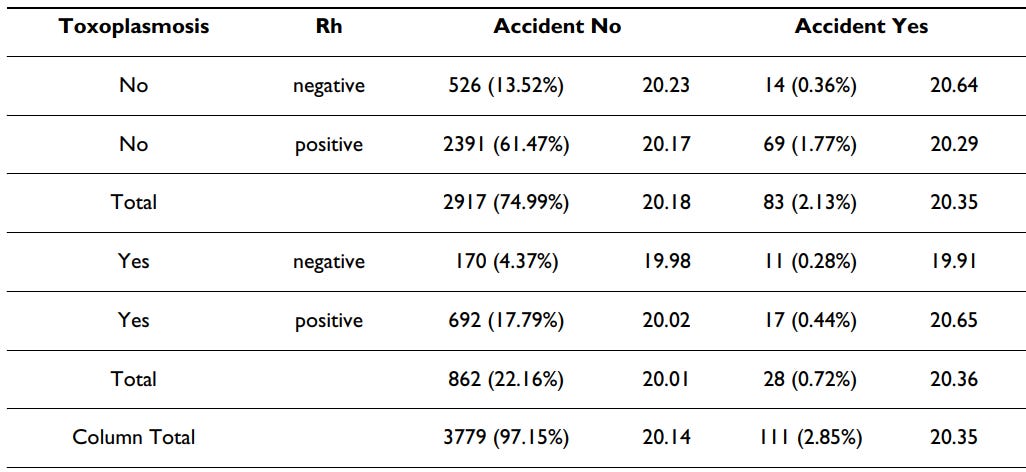
In a 2009 longitudinal study of 3,890 Czech military drivers (all men), Flegr’s group tested them for T. gondii at the beginning of compulsory military service, and their traffic accidents were later identified from military police records. This design was stronger because infection status was measured before the accidents occurred, reducing reverse causation.
The results were a little complex. Dormant T. gondii infection did not raise accident risk equally in everyone. The effect depended partly on RhD blood-group status and levels of T. gondii-specific antibodies.
Among RhD-negative drivers, dormant T. gondii infection was associated with a higher accident rate: 6.1% of infected drivers had a traffic accident, compared with 2.6% of uninfected drivers (Figure 7). In contrast, RhD-positive drivers did not show the same association.
The risk appeared highest in RhD-negative drivers with higher T. gondii-specific antibody levels, where about 17% (3 of 18) had a traffic accident within the next 12–18 months. But because this high-risk subgroup was small, the sharp increase should be interpreted cautiously.
So the 2009 study suggests that the parasite’s behavioural effect on traffic accidents, if real, may depend heavily on host biology and vary by sex, antibody titre, time since infection, and host genetics.
(While a few other studies have linked dormant T. gondii infection to traffic accidents in other countries, they were retrospective by design. They start with people who had already been in accidents and then see whether they were more likely to carry the parasite. As mentioned, this design is very vulnerable to reverse causation and confounding.)
(RhD-negative blood is most common in people of European ancestry, where about 15–20% of the population is RhD-negative. It is less common in many African and Middle Eastern populations, and rare in much of Asia.)
Risky Business
If dormant T. gondii infection may increase risk-taking, perhaps it might also affect the willingness to take social or financial risks. That was the logic behind an influential 2018 study, with a title that opened with “Risky business,” led by scientists at the University of Colorado, U.S.


